Introduction
A handbag collection often starts with a few favourite pieces. As the collection grows, the shelf becomes crowded. Totes lean against clutches, chains get tangled and smaller bags become difficult to find. Soon, choosing one bag means moving several others out of the way.
A good designer handbag organization system protects your bags and makes the wardrobe easier to use. and makes the wardrobe easier to use. Grouping similar pieces and giving each bag its own place can help you use the available space properly.
Why Proper Handbag Storage Matters
Designer bags come in different shapes and materials. A structured tote needs support to hold its shape, while a soft clutch usually needs less space.
Poor designer handbag storage can cause bags to lean, lose their shape or rub against each other. Zips, buckles and chains may also leave marks on the bags stored beside them. These problems can be difficult to spot when the shelves are overcrowded.
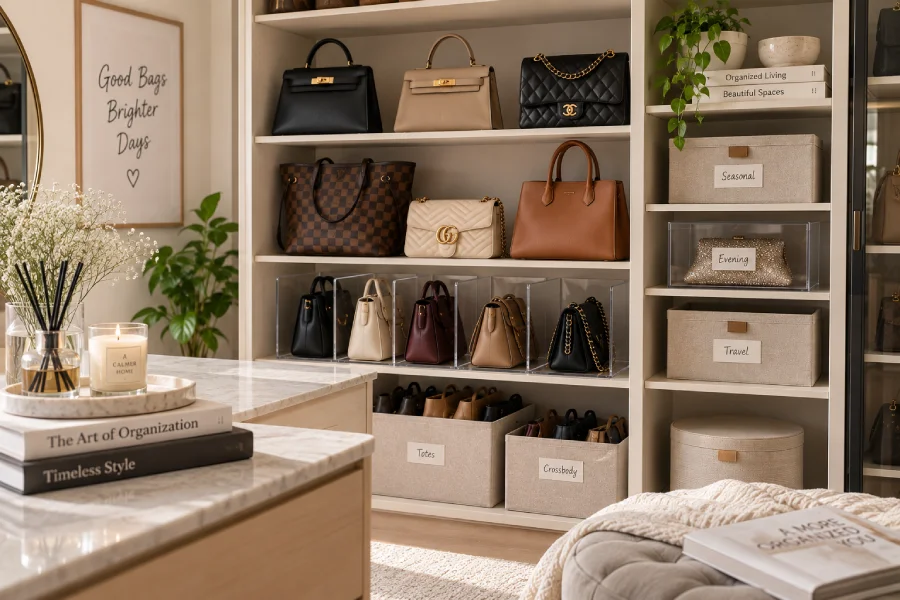
Proper storage gives every bag enough room. It keeps everyday pieces easy to reach and occasion bags safely stored until you need them. Clear handbag closet organization also makes the full collection visible, so fewer bags are forgotten at the back of the wardrobe.
Professional help can be useful if the collection no longer fits comfortably in the available space. Founded by Aanchal Kejriwal in 2021, Arrange It All has completed more than 500 organising projects. Our professional organizer team creates a system based on your bags, available storage, lifestyle and daily routine.
How to Organize Designer Handbags Without Damaging Them
Every bag has a different size, shape and material. These simple steps can help with organizing handbags at home without damaging them.
1. Empty and Check Your Bags
Take every handbag out of the wardrobe and empty all its pockets and compartments. Check each piece for marks, damaged zips or buckles, and areas that have lost their shape.
Read the brand’s care instructions before cleaning a bag. A cleaning product that works on leather may not be suitable for suede, canvas or embellished materials.
2. Group Bags by Type and Use
Keep totes, shoulder bags, crossbody bags, clutches and occasion bags in separate groups. Then decide which ones you use regularly and which ones you only carry occasionally.
Place everyday bags within easy reach and keep occasion pieces on higher shelves. Heavier bags can go on lower shelves, where they are safer and easier to lift. These handbag organization ideas help you arrange the collection around your usual routine.
3. Measure the Available Space
Measure each shelf and compare it with the dimensions of the bags before buying organisers.
Large totes need room to stand without bending their handles. Small handbags may fit into divided sections.
If the wardrobe does not suit the collection, a customised space designing service can plan shelves and compartments around the bags you own.
4. Support Each Bag’s Shape
Fill structured bags lightly with clean tissue paper. Support the sides without stretching the material or pressing against the closure.
Clean packing air pillows may also be used if they fit inside the bag without stretching it. Avoid newspaper because its ink may transfer, and do not overfill the bag.
5. Store Bags Upright and Separately
Stand structured handbags upright on their base. Leave a small gap between them to prevent rubbing.
Shelf dividers can stop bags from leaning. If you need a handbag organizer for closet shelves, choose one that supports the bags without pressing against their sides.
Soft clutches may be stored flat if their design allows it. Avoid tall stacks because the weight can flatten the bags at the bottom.
6. Protect Straps and Hardware
Avoid hanging heavy handbags for long periods because their weight can strain the handles.
Keep removable straps inside the correct bag. Wrap chain straps in clean tissue so they do not rest against the exterior or a neighbouring bag.
7. Use Breathable Dust Bags
Use the original dust bags where possible. A clean cotton pillowcase is a suitable alternative.
Breathable fabric protects the surface while allowing air to circulate. Avoid sealed plastic covers because they may trap moisture.
Add a small label or photograph to an opaque cover. You can then identify each bag without opening several dust bags.
8. Choose a Cool and Dry Area
Keep the collection away from direct sunlight, heat and damp walls. Light may fade certain materials, while moisture can affect leather and hardware.
A closed wardrobe provides better dust protection. For visible storage, use a glass-front cabinet away from windows. These handbag display ideas protect the collection without hiding it.
9. Make the System Easy to Maintain
Useful handbag storage solutions should match your wardrobe and collection. A small closet may need vertical dividers, while a larger designer handbag closet may have cubbies and drawers.
A wardrobe organizing service can clear the surrounding clutter and create sections for bags and accessories. Arrange It All plans the setup around the number and size of your bags, your storage and how often you use each piece. This makes it easier to maintain.
During a move, an unpacking and organizing service can arrange the collection in the new wardrobe.
Common Designer Handbag Storage Mistakes to Avoid
Even the best handbag storage ideas can fall short when the storage shelves are too full or when storage bags are not supported. Here are some of the most common mistakes to avoid:
- Keeping bags too close: They may rub against each other and lose their shape.
- Leaving bags empty: Structured bags may fold or develop creases.
- Excessive filling: This can cause the bag to stretch or to come in contact with the zip.
- Plastic covers: Can create a warm microclimate that can retain moisture.
- Heavy bags: The weight on the handles can cause them to break with time.
- Leaving chains uncovered: May scratch the bag or other nearby items.
- Not measuring before buying organisers: This may result in wasted space or squeezing the bags.
FAQs
How should I store designer handbags at home?
If you are wondering how to store designer handbags, keep them in a cool, dry wardrobe away from sunlight. Empty each bag, support its shape and use a breathable dust cover.
Is it better to store handbags upright or flat?
Store structured handbags upright on their base. Soft clutches may lie flat if nothing heavy is placed on top.
How do I keep designer handbags in shape while storing them?
Fill them lightly with clean tissue paper or suitable air pillows. Do not add enough filling to stretch their sides.
Should designer handbags be kept in dust bags?
Yes. Breathable dust bags protect handbags from dust, scratches, and contact with nearby items.
How can I organize handbags in a small wardrobe?
Use vertical dividers, adjustable shelves, and separate sections. Keep frequently used bags accessible and place occasional pieces higher up.
Can I display designer handbags without exposing them to dust or sunlight?
Use a glass-front cabinet away from windows. It keeps the collection visible while reducing its exposure to dust and direct sunlight.