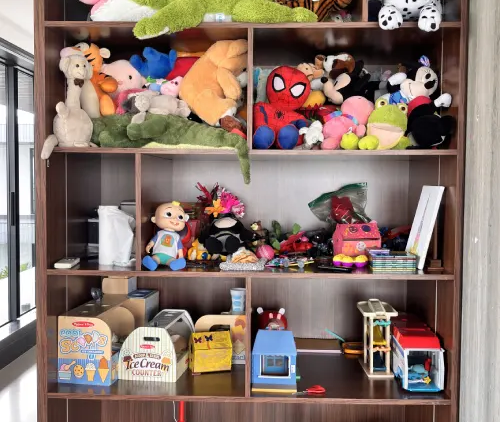
A small bedroom can start to feel crowded faster than you think. A few extra clothes on a chair, books on the bedside table or boxes stuffed in corners can make the whole room look messy.
The problem isn’t necessarily that you have too much stuff. Sometimes the real problem is that everything doesn’t have its place.
The goal is to increase storage without creating a heavy look in the room. That means using vertical space, reducing what stays visible, and selecting furniture that serves more than one purpose.
Begin by decluttering, utilize walls and forgotten corners for storage, select multifunctional furniture and leave some spaces intentionally empty. Better a small room with room to breathe.
What Is the Best Way to Organize a Small Bedroom?
Before buying baskets, shelves or storage boxes, start with the belongings themselves.
The first thing is to determine what absolutely needs to stay in the bedroom. Things that should be somewhere else are just taking up space that could be used for something else.
Then break it down into three simple categories:
- Daily use: Things used on the regular and should be within reach.
- Occasional use: Items used on an occasional basis that do not require prime storage.
- Rarely used: Seasonal or infrequently needed belongings that can go into less accessible areas.
In this manner, the common mistake of giving to each possession the same amount of space is prevented. The frequently used ones are convenient to use and everything else can go in secondary storage.
10 Ways to Organize a Small Bedroom
A small bedroom can feel surprisingly spacious with the right approach. These simple ideas focus on using overlooked areas, reducing visual clutter, and making every storage choice work harder.
1. Use Vertical Space
When you’re tight on space, look up.
Wall shelves can be used to hold books and small belongings. Tall storage units offer more capacity without spreading across the floor. You can also hang bags, hats, accessories or things you use a lot on hooks and pegboards.
Vertical storage helps keep useful belongings accessible while leaving more walking space open.
2. Choose Multi-Functional Furniture
In a small bedroom, furniture must justify its presence.
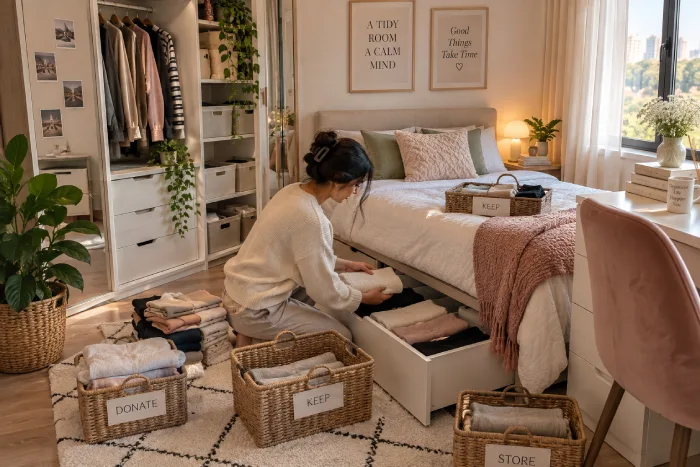
A storage bed has space underneath for bulky items. A bedside table with drawers can replace a separate storage unit, and an ottoman or bench with hidden storage can provide seating and extra space.
The advantage is simple: one piece of furniture can serve two functions without adding another piece to the room.
3. Maximize Under-Bed Storage
Often there is wasted space under the bed.
Use heavy-duty storage boxes for bedding, shoes or things you don’t use often. They can cut down the volume of it and help save room on your wardrobe for seasonal clothing.
Label each container clearly so you can get to something without having to pull everything out.
4. Keep Surfaces Clutter-Free
Even if a bedroom is neat, a cluttered bedside table can make it look untidy.
Store only necessary materials in easy-to-reach locations. Everyday items can fit into a small tray; for example, glasses, a watch or keys, and a compact organiser can stop smaller items from being strewn across dressers.
5. Use the Back of Doors
Use the back of doors to create a more dramatic look. A door is a great space-saving storage solution.
Hanging organizers can be used for accessories, toiletries or small personal items. Hooks are ideal for bags and scarves, as well as often-used items.
If you have a small wardrobe in your bedroom, an over-door shoe or accessory storage can maximize the space available in your drawers and shelves.
6. Organize Your Wardrobe by Category
A wardrobe is easier to manage when clothing is grouped logically.
Keep clothes together. Separate work. Occasional clothes. Move clothes to less accessible areas when that is appropriate. Accessories should have their designated section rather than being scattered among clothes.
For homeowners who need extensive help professional Wardrobe Organizing services can create systems around the clothing and the storage space that they actually have.
7. Use Mirrors to Make the Room Feel Bigger
A positioned mirror can make a small bedroom feel more open.
A full-length mirror on a wardrobe door or wall can reflect light. Create a stronger sense of depth. Positioning the mirror where the mirror reflects a window or a lit part of the room can make the space appear brighter.
The key is placement. One positioned mirror is usually more effective than filling the room with several mirrors.
8. Keep Storage Visually Light
Storage should solve a problem without becoming a feature of the room. I find that matching or neutral storage boxes can create an appearance. When using shelves I advise avoiding filling every section with belongings. Many visible storage containers, colours and objects can create visual noise even when everything is technically organised.
9. Create a Dedicated Place for Small Items
Small belongings are easy to lose. Surprisingly good at creating clutter.
Give jewellery, electronics, books and personal accessories their locations. Drawer dividers, small trays and compact boxes can keep these items together.
When every small item has a home, random piles are less likely to appear on furniture.
10. Leave Some Empty Space
Not every shelf, wall, or corner needs to be filled.
Empty floor space makes movement easier, while some breathing room between storage pieces can make the entire bedroom feel less crowded.
An organised bedroom isn’t about using every available inch. It’s about using enough of the space to support daily life while keeping the room comfortable.
How Can You Make a Small Bedroom Look Bigger?
Storage choices determine how roomy a bedroom feels.
Keep the floor as clear as possible. Avoid unnecessary furniture. Light simple pieces can make the room feel less heavy while vertical storage draws the eye upward rather than making the walls feel packed.
Consistent colours and similar storage styles can also create an appearance. Of having several unrelated boxes and furniture finishes choose a more cohesive look.
The result is a room that may not have physically changed in size but feels much easier to move around and live in.
Common Small Bedroom Organization Mistakes
- Even good intentions can turn a bedroom into a cramped space. Watch out for these mistakes:
- Adding much storage: More storage isn’t helpful if it takes up the room you need to move around.
- Filling every wall: Leaving some wall space empty can make the room feel more open and airy.
- Keeping everything open shelves or exposed items can lead to visual clutter quickly.
- Buying furniture without measuring: A looking piece won’t help if it blocks the doorway or makes the room feel tight.
- Ignoring space: You can use the walls for storage without taking up floor space.
- Organizing without decluttering: Fancy containers won’t fix the problem of keeping things that don’t belong in the bedroom anymore.
How Do Professional Organizers Approach Small Bedrooms?
Professional organizers start by looking at the room as a whole of immediately adding storage.
Professional organizers assess the space, understand the clients belongings and identify what should stay in the bedroom. After decluttering, professional organizers create zones based on how the room’s actually used. Storage is then selected according to the user’s needs rather than simply following a popular organizing trend.
The final step is creating a system that’s easy to maintain. The final step matters because an impressive setup is not useful if the final step becomes difficult to manage after a week.
For homeowners who want support, beyond one room Arrange It All provides a home organising service designed around individual homes and routines. Those moving into a property can also consider professional unpackers and organizers to get the belongings organised from the beginning.
Small Bedroom Organization: DIY vs. Professional Help
| DIY Organization | Professional Organization |
| Good for simple clutter | Useful for complex clutter |
| You organize at your own pace | A structured organizing process |
| Usually lower cost | Personalised solutions |
| Best for routine maintenance | Helpful when you don’t know where to start |
DIY organising works well when the Bedroom organization consultation needs a simple reset and the owner has enough time to sort everything independently.
Professional help can be useful when clutter feels overwhelming, storage is difficult to manage, or several areas need to be reorganised together.
Frequently Asked Questions
How do I organize a very small bedroom?
First get rid of objects that are not or do not belong. Then, take advantage of vertical space, under bed space, multi-purpose furniture and designated areas for daily items.
How can I maximize storage in a small bedroom?
Make use of wall shelves, tall storage units, under-bed boxes, door organisers and furniture with inbuilt storage. Avoid using space that diminishes the room for walking.
How do I make my small bedroom look less cluttered?
Keep surfaces clear, minimise the number of visible items in storage, use one system of storage containers, eliminate unnecessary furniture and leave some space on the floor and wall empty.
What furniture is best for a small bedroom?
Consider multifunctional furniture like storage beds, drawer bedside tables, benches or ottomans with concealed compartments.
How to organize clothes in a small room?
Organise clothes into the most accessible areas of the wardrobe for most-used items. Clothes that are seasonal and infrequently worn can be under the bed or in higher storage areas.
What are some tips for decorating a small room on a budget?
Do some sorting out first, with the purchase of products. Reuse boxes, create basic hooks, organise shelves, bins and drawers and utilise under-bed space.
Final Thoughts
A small bedroom isn’t about more furniture, it’s about better organization.
Begin with what you already have. Declutter. Use vertical and underused spaces. Invest in multifunctional furniture. Keep frequently used items close at hand.
Most important, don’t feel like you have to fill every nook and cranny. A bedroom has to breathe. The idea is not to fit everything into a small bedroom. It is to make the space functional, comfortable and easy to live in.