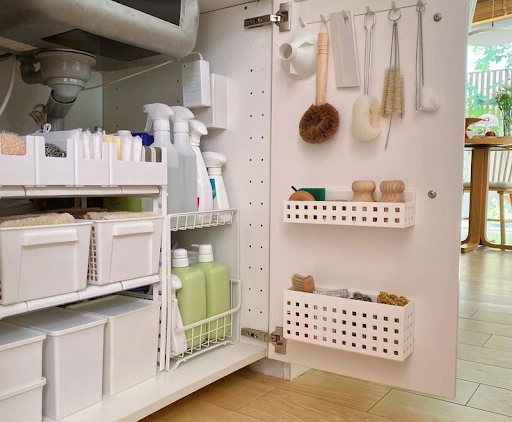
The simplest way to get rid of clutter is to organize your belongings into three groups: keep, give away or throw out. Keep the things you use often. That you really like to give away items that are still in good condition but no longer needed and remove anything that is broken past its use by date or just taking up room.
When you are cleaning up you don’t need to get rid of everything. The purpose is to make your living area feel more peaceful and easier to handle by holding on to the things that’re helpful, important or have a role to play. Begin by focusing on one room at a time and decide which items should have a spot in your home.
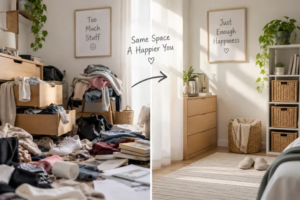
How to Decide What to Keep, Donate, or Throw Away
Before you start, pick one small area instead of trying to declutter your whole home at once. A wardrobe shelf, kitchen drawer, bathroom cabinet, or bedside table is a good place to begin.
As you go through your belongings place each item into one of these three groups:
- Keep: Items that you use regularly that you really need, that you have an attachment to or that you depend on in your daily life.
- Donate: Things that’re still in good shape but you don’t use anymore—items that could be helpful, to someone else.
- Throw away: Objects that are broken, expired, ruined, unsafe or no longer work in any way.
Not sure where something belongs? That is fine. Put something into a ‘decide later’ box and come back to something once you have finished sorting. That keeps you moving or getting stuck on every difficult decision.
The 5-Box Method: A Simple Way to Declutter
The 5-box method makes decluttering easier by giving every item a clear place to go. Instead of creating just a keep and throw-away pile, sort your belongings into five categories:
- Keep – Things you use and want to keep.
- Donate – Items that are still useful but no longer needed.
- Sell – Things that are in good condition and worth selling.
- Throw Away – Broken, expired, damaged, or unusable items.
- Relocate – Items that belong somewhere else in your home.
The relocate group can be very useful because not everything that is in the place needs to be thrown away. Sometimes things just end up on the spot. For example a book on the kitchen counter does not need to go in the trash, it just needs to go on the shelf.
This way of doing things can also help you avoid creating a pile of “I will think about it” thoughts. When you have your five groups set up you can choose what to do with each item and keep the process moving.
What Should You Donate When Decluttering?
If something is still clean, safe, and in good working condition but you no longer use or need it, it may be a good candidate for donation.
Some common examples include-
- Clothes that no longer fit but are still in good condition
- Books you’ve finished and don’t plan to read again
- Extra kitchenware you rarely use
- Household items that are still useful but sitting unused
- Toys that your children have outgrown
- Furniture that no longer suits your space
- Bags and accessories you hardly ever use
I think before you drop anything into the donation pile you should ask yourself whether someone else could truly use it. Donating is not a trick to avoid throwing away. If an item is broken, heavily stained, expired, unsafe or too damaged to use it is usually better to dispose of it instead of handing the problem over to someone else.
“Decluttering isn’t about getting rid of everything. It’s about making thoughtful choices about what genuinely belongs in your life.” – Aanchal Kejriwal, Founder, Arrange It All
What Should You Throw Away?
Some things just aren’t worth holding onto. Especially when they no longer. Have no use at all. Think about letting go of items that’re
- Broken and can’t be fixed
- Out of date or past their use-by date
- In shape or could be dangerous to use
- Missing key pieces that make them useless
- Empty containers that serve no purpose anymore
- Extra copies of things you don’t actually need
- Items that no longer do anything for you
For example keeping a makeup product that expired just because a little bit is left doesn’t save anything. It only takes up space. Adds to the mess.
The same is true for cords that are tangled. You don’t know what they’re for cracked storage boxes, pens that are dry and won’t write, old stationery or manuals, for devices you don’t own anymore. If you can’t use it, fix it or see a reason to keep it. It’s probably time to let it go.
Questions to Ask Before Keeping Something
If you are struggling with a particular item, use a simple decision-making process.
1. Do I Use It?
Keeping something around is a good reason to hold on to it.
If you use an object often or you know you will need it for a task it makes sense to keep it.
2. Would I Buy It Again Today?
Imagine you did not already own the item. Would you spend money on it today?
If the answer is no, ask yourself why you are still keeping it.
This question can be especially useful for clothing, décor, kitchen gadgets, and duplicate household items.
3. Do I Have Something Similar?
Duplicates can quietly create a lot of clutter.
You may not need six water bottles, four nearly identical handbags, or several kitchen tools that perform the same job.
Keep the versions that are most useful and let the extras go.
4. Am I Keeping It Because of Guilt?
Gifts can be hard to get rid of because the feeling you have for a person can stick to the gift.
Remember that appreciating a person or a memory does not always mean keeping everything that reminds you of it.
If a thing has sentimental value, keep it on purpose.
If you keep it only because you feel bad, about getting rid of it you might want to think.
5. Does It Have a Place?
Everyday items should ideally have a designated home.
If you continually move an item from one surface to another because you do not know where it belongs, ask whether the item is useful enough to justify creating storage space for it.
How to Declutter Your House Room by Room
Trying to declutter your entire home in one go can feel exhausting. Instead, take it one room at a time. This makes the process easier to handle and gives you a clear sense of progress as you go.
For those who prefer professional support, Arrange It All also helps make the organizing process more practical and manageable.
Bedroom and Wardrobe
Start with your clothes, shoes, bags, and accessories. Take out anything that doesn’t fit, feels uncomfortable, is damaged, or hasn’t been worn even though you’ve had plenty of chances to wear it.
Once you’ve decided what to keep, organise things based on how often you use them. Keep everyday clothes where they are easy to reach, and store seasonal or occasional items separately.
Kitchen and Pantry
In the Kitchen and Pantry first check expiry dates. Throw away anything that is no longer safe to use. Next look for utensils, appliances that you rarely use, extra containers and food that you are unlikely to eat.
Place the items you use often within easy reach, in the Kitchen and Pantry and group similar items together. For example keep spices in one place, baking supplies together and snacks or breakfast items in their sections.
Bathroom
Bathrooms can easily become a collection point for products you bought but never used. Go through your cosmetics, skincare, medicines, toiletries, towels, and cleaning supplies.
Get rid of anything expired, empty, or no longer usable, and keep the products you use regularly somewhere that’s easy to reach.
Living Room
Look at the things in your space, like the decorations, the books, the gadgets, the toys, the papers and all the other little things that usually end up here. Think about if each of those things is really helpful or brings something to the room.
Even if you have a shelf or a table that is empty that doesn’t mean it has to be filled with stuff. Keeping some areas open can help the room feel more peaceful and simpler to take care of.
What If You Find It Difficult to Declutter?
Sometimes, the hardest part of decluttering isn’t knowing what to do it’s making decisions about what to keep and what to let go of.
If you’re feeling overwhelmed, don’t try to tackle the whole house at once. Start with just one drawer, shelf, or small area and spend 15 – 20 minutes sorting it. Even a small amount of progress can make the process feel easier and give you the motivation to keep going.
If you find it difficult to make decisions on your own, getting some professional guidance can also help.
If you feel stuck or need help creating practical systems for your home, Arrange It All can be a useful option for professional organizing support.
“You don’t have to declutter your entire home in one day. Start with one small space and let the progress build from there.” – Aanchal Kejriwal, Founder, Arrange It All
Way to Make Keep/Sell/Donate Decisions Faster When You’re Under Time Pressure?
When you’re decluttering on a deadline, spending several minutes thinking about every single item can quickly become exhausting. Instead, keep the process simple and focus on whether you actually use something now, rather than thinking about all the ways you might use it someday.
Ask to yourself:
- Have I used this in the last year?
- Would I buy this again today?
- Is it worth the space it takes up?
- Could someone else get more use out of it?
- Is it broken, expired, or no longer useful?
If you know you use and need something, put it in Keep. If it’s still useful but you don’t need it anymore, put it in Donate or Sell. If it’s damaged, expired, or no longer usable, put it in Throw Away.
The goal is to keep things moving. Don’t turn every item into a long emotional debate. Give yourself a few seconds to make an initial decision, trust your judgment, and move on to the next item.
How to Keep Your House Decluttered
- Start small. You focus on one area. Sort items into keep piles, donate piles or trash piles. Give every kept item a home.
- Try the one‑in one‑out rule. When you buy something consider letting go of a similar item you no longer use.
- Give everything a place. Keep used items in a specific spot so they are easier to put away.
- Do a 10‑minute reset. Spend a minute at the end of the day putting things back where they belong.
- Check your storage regularly. Go through wardrobes, drawers and cabinets every month to catch clutter early.
- Think before buying. Do not buy something just because it is on sale. Ask yourself if you actually need it.
- Don’t let donations pile up- Once you’ve decided to donate something, try to get it out of the house rather than leaving the bags sitting around.
- Don’t ignore hidden clutter- Every so often, check drawers, cabinets, and other storage spaces where things tend to get forgotten.
These small habits make it much easier to keep your home organised by a professional home organizer . Instead of waiting for clutter to become overwhelming, you deal with it little by little as it builds up.
Conclusion
Decluttering isn’t about living with as little as possible. It’s about making room for the things that genuinely matter to you. The things you hold onto should match the way you live now instead of keeping things from before. If you give away items that’re still good and throw away things that are broken or not needed anymore you can cut down on mess and make your house feel nicer, more practical and simpler to live in.
“An organised home should make your life easier, not give you another list of things to maintain.” – Aanchal Kejriwal, Founder, Arrange It All
FAQs
1. How do I decide if something is worth keeping?
Decide if an item is worth keeping by testing its current use, practical value, and emotional impact
2. Should I keep duplicate items when decluttering?
Keep only as many as you realistically use you should let go of duplicate items unless they serve a distinct, active purpose in your daily routine
3. What should I do with things I might need someday?
To decide what to do with things you might need someday.. test if you would realistically replace, buy, or borrow the item for a low cost and little effort if you actually need it in the future
4. How can I declutter sentimental items without regretting it?
Letting go of sentimental things is deeply emotional, but your memories live inside you, not in the object. You can ease the anxiety by taking photos of bulky keepsakes, keeping only what fits into a single dedicated memory box, and releasing items you hold onto purely out of guilt
5. Is it better to sell or donate unwanted items?
Donating is the fastest way to completely remove clutter from your home, also it helps people who really need that thing, giving you an immediate sense of relief. It requires very little effort you simply pack the boxes and drop them off It
6. What should I do with things that are still useful but I never use?
The absolute best thing you can do with unused items is to pass them on to someone who will actually use them right now. When you keep an item ” in case” or because “it is still perfectly good” it sits in a closet losing value and gathering dust. Giving or selling it to someone breathes new life into the object and immediately frees up your physical and mental space.