Key Takeaways
- An organized kitchen removes the small daily frustrations that add up more than you’d expect. You stop forgetting what you already have, stop digging through shelves, the kitchen simply feels easier to manage.
- To organize kitchen cabinets, empty them out first instead of trying to rearrange items while everything is still inside.
- When similar items stay together, the kitchen stays organised with less mess and without needing a full reorganisation every week.
- Putting things back where they belong consistently does more than any reorganisation session.
- Working with a professional home organizer can create storage systems that are functional and easier to maintain daily.
We’ve all had that one kitchen cabinet where lids fall out every time you open it? Or a shelf where three half-used pasta packets, an expired ketchup bottle, and a mystery container from 2023 are somehow sitting together?
If you’re wondering how to organize kitchen cabinets like a pro, keep reading for methods that work in real Indian kitchens where masala dabbas, pressure cookers, steel containers, and snack packets seem to appear from nowhere.
Why Kitchen Cabinet Organization Matters More Than You Think
A messy kitchen drains you in small ways. How often do you search for spices, move five containers to reach one pan, or buy duplicates because you forgot what was already sitting in the cabinet?
Cooking feels quicker, and cleaning up becomes less stressful when your kitchen cabinets are organized. Morning chai feels calmer when you don’t have to open three cabinets just to find one thing. Once your cabinets are sorted, you stop buying another packet of jeera because you couldn’t find the first one. You notice expiry dates faster. Even unloading groceries becomes less chaotic.
A professional home organiser builds a system around how your home functions rather than relying on a generic template.
Start by Emptying Every Kitchen Cabinet
If you want kitchen cabinets that stay organised, start by taking everything out first. Place all the items on your kitchen counter or the floor and wipe down every shelf before putting anything back.
It feels exhausting halfway through, but you only realise how much unnecessary stuff you own after the shelves are empty.
Sort Kitchen Items Into Categories Before Putting Them Back
Once everything is out, it’s time to sort. While sorting, you’ll find strange things. Duplicate peelers. Expired pasta. That one baking mould you bought during the banana bread phase of 2020.
Look at each thing and ask whether it’s genuinely used or just taking up room. Before returning items to the cabinets, group them into categories. Keep your tea and coffee things together. Store lunch boxes near containers and foil rolls. Everyday plates should not be hidden behind serving dishes nobody touches except during festivals.
One of the smartest kitchen cabinet organization hacks is keeping everyday items at eye level. Rarely used items can go on the higher shelves.
If the process feels overwhelming, bring in a home organizing consultant from Arrange It All to make life easier by organising the kitchen around how your family actually uses it.
Smart Kitchen Cabinet Organization Ideas for Different Cabinets
What works for upper cabinets won’t work for corner ones. Different spaces need their own organizing logic.
Upper Kitchen Cabinets
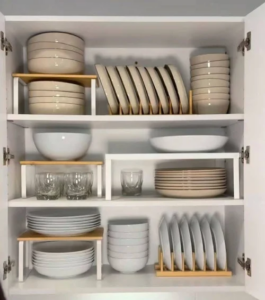
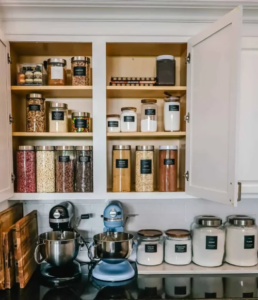
Upper cabinets work best for lighter and frequently used items. Items like plates and bowls, everyday glasses, coffee mugs, spices, and pantry staples can go here.
If shelves feel cramped, a basic riser can double your usable shelf space instead of stacking everything into one dangerous pile. Clear bins also help you see what’s hiding at the bottom.
Lower Kitchen Cabinets
Lower cabinets are ideal for heavier items like pots and pans, pressure cookers, mixing bowls and appliances.
If you’re figuring out how to organize deep kitchen cabinets, avoid stacking heavy cookware directly on top of each other. Instead, use wire baskets or pull-out trays.
Corner Cabinets
Corner cabinets are often where kitchen items seem to disappear. A simple turntable works really well. You can store oils, sauces, and spice bottles here, as they often disappear into corners.
Under the Sink Cabinets
No matter how organised the kitchen is, the space under the sink somehow becomes chaotic first. Use small bins to separate categories like dishwashing supplies, surface cleaners, trash bags, scrubbies, etc. Don’t pack this area too tightly either because under-sink spaces get damp and the occasional leak is more common here than anywhere else.
For homeowners looking for tailored storage solutions, Arrange It All’s customized space planning services can make every inch work effectively without making the kitchen feel cramped.
Maintenance Tips to Keep Kitchen Cabinets Organized Long-Term
Even the best kitchen cabinet organization can get messy without occasional maintenance. Following a few small routines can save you from a complete reset every month.
You don’t need to deep clean cabinets every weekend. Just putting stray things back once a week helps more than people think. Labels help too, especially in homes where everyone keeps asking where things belong.
And every few months, do a quick reset. Every few months, something or the other in the kitchen changes, something new comes in, old containers pile up, and suddenly nothing fits the way it did.
Also, if you work remotely from home, home office organizer services from Arrange It All are worth looking into for creating a more functional and clutter-free workspace.
Frequently Asked Questions
1. How do professional organisers organise kitchens?
A professional organiser first looks at how the household actually uses the kitchen, then builds the system that works around that.
2. What should not be stored in kitchen cabinets?
Avoid storing expired food, duplicate containers, broken appliances or items you never use. Cleaning chemicals should also stay away from food storage areas.
3. Should food be stored in kitchen cabinets or drawers?
Depending on the layout, both can work well. Cabinets are usually for dry foods and pantry staples, while deep drawers are ideal for snacks, spices or packaged items that need better visibility.
4. Where should dishes go in kitchen cabinets?
Everyday dishes should stay in the upper cabinets. Heavier serving dishes can go in lower cabinets.
5. How to organize small kitchen cabinets?
Use vertical storage, shelf risers, stackable bins, and cabinet door organizers to maximize space. Group similar items together and avoid overfilling shelves so everything remains visible and accessible.