
A lot of people are surprised when we tell them this, but some of the most cluttered-looking homes we go into are actually clean. Properly clean. Counters wiped, cushions fluffed up, not a thing lying on the floor. Still, you walk in, and the room feels full somehow. And the person living there will usually tell us, “I cleaned the whole house just now; why is it still looking like this?”
Most times, the answer has very little to do with how much stuff they have. It is about how that stuff has been put away. Our team has been organising homes across India for quite a few years now, and the same ten mistakes keep coming up, house after house. The good part is that most of them get sorted in one afternoon, sometimes even quicker.
The short version
Short on time? Here’s the gist. A house starts looking cluttered when your eye cannot find any order in it. There is stuff on every open surface, shelves are packed so full that nothing more will go in, jars come in five different shapes, and things sit wherever they landed instead of next to the things they belong with. So declutter before buying even one organiser, store things by category, keep some breathing room on every shelf, give your daily-use things a fixed place near the door, and make a system the whole family can follow (not only you).
10 organising mistakes that make a home look cluttered
1. Buying organisers before you declutter
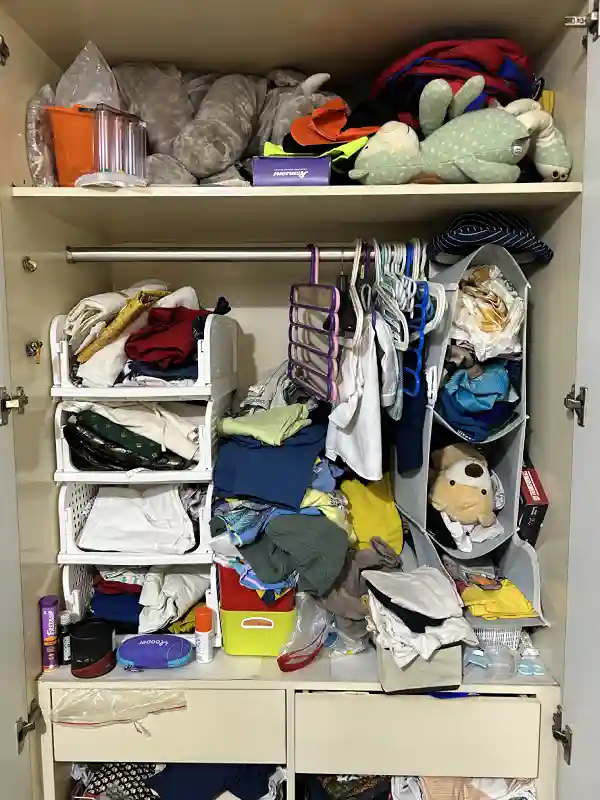
Out of all ten, this is the one we see in almost every house we work in. Many people start by buying a set of nice baskets, since that seems like the obvious place to begin, and we don’t blame anyone for it. But when half of what goes into those baskets is not being used at all, nothing much has changed. The same clutter is now sitting inside better-looking boxes. Two or three months down the line, there are half-empty boxes lying around, a few organisers that were too big or too small for the shelf, and some extra containers that were kept aside “just in case”, and all of that is one more thing to sort out.
Our advice to every client stays the same: sorting comes first, then measuring, and shopping comes at the very end. When we are working on a home, we do not go to a store until we have planned each space on paper and we know clearly what the family wants to keep. That way, each organiser we pick up is meant for one particular shelf or drawer, and nothing extra comes into the house.
2. Using every flat surface as storage
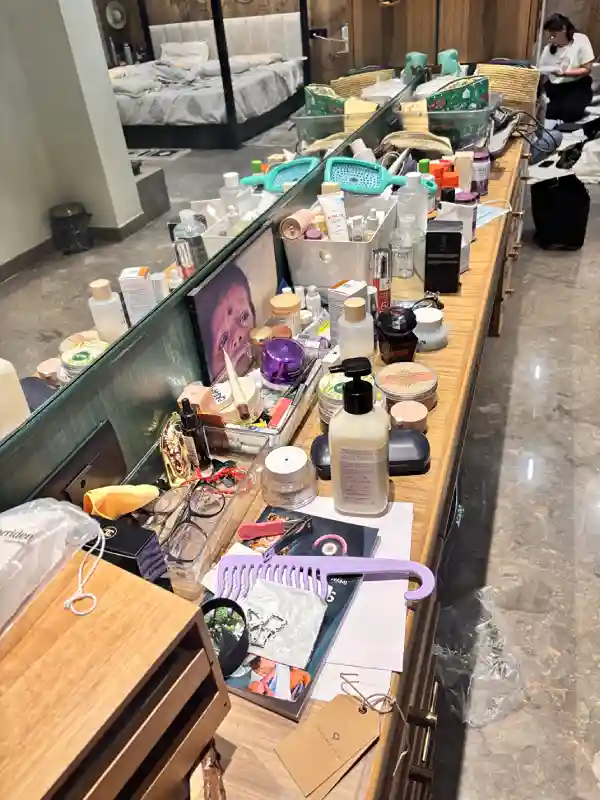
In almost every house we visit, the dining table has slowly become a storage spot. There is the post, a bowl of fruit, a phone charger, somebody’s school bag, and usually one screwdriver that no one remembers leaving there. The kitchen counter isn’t much different; it has eight or nine things the family says they need every day. Then there is the bedside table, with a pile of books that gets a little taller each month.
Flat surfaces are the first thing anyone notices when they walk into a room. Because of that, even four or five things left lying on them are enough to make the room feel full. Pick one surface and look at each item on it, and ask whether it really has to be kept there. Suppose it does not, find it a place in a drawer or a cupboard. For the kitchen counter, we usually tell families to keep only what they use every single day, and in most Indian kitchens that comes down to the stove, the kettle and the masala dabba.
3. Containers that don’t match, or don’t fit
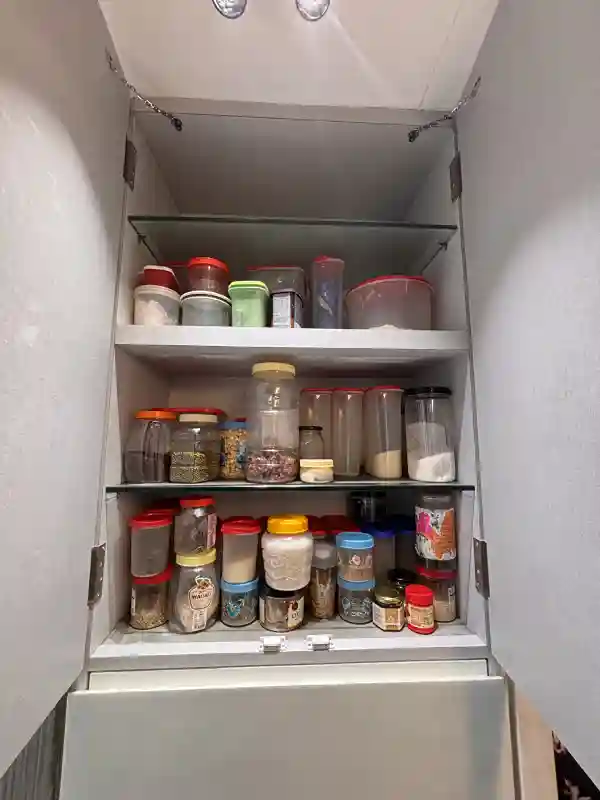
Think of a shelf with six kinds of jars on it. They are all different sizes and shapes; some are plastic, and some are glass; one used to be a Bournvita jar and now has rubber bands in it, and only two have a label. Even when everything inside them is sorted properly, the shelf still looks messy, and when you need the jeera or the moong dal, you end up opening three jars before you find it.
For one space, try to keep the jars uniform, the same type and the same style, and go for clear ones so you can see what is inside without opening them. Put a label on the front saying what is inside, and on the back write the date it was last refilled. When the jars are uniform, labelled and clear, the shelf looks neat, it works like a system, and anyone in the house can find what they need whenever they need it.
4. Organising by room instead of by category
Ask yourself where the scissors are kept in your house. In many homes, the answer is the kitchen drawer, the study table, the bedroom, and one more pair somewhere in the car. Chargers end up in three different drawers, and medicines are kept wherever someone used them last. Because nobody can find the first one, people buy a second one, and over time the house fills up even though every room by itself looks tidy.
A better way is to bring together everything from one category from the whole house before deciding where it goes. All the medicines in one place, then all the stationery, then all the chargers, cables and wires. This is also a good time to declutter. Cables and wires that no one can say what they belong to can go, and so can medicines that nobody recognises or that are past their expiry date. When everything is in front of you, you can see how much you have, and only then decide how much space it needs and where it should be kept.
5. Stacking things too high
Sarees stacked one on top of another, towels piled up, plates kept ten high in the cupboard. It looks neat for the first day. But you can only see what is at the top, and when you pull something out from the middle, the rest falls over. In a week, the neat pile is leaning to one side.
Try to store things so that you can see each piece. Keep a stack to five or six items, use shelf dividers, or try file folding, where clothes and towels are folded and kept standing up in baskets or drawers, the way files sit in a drawer. For sarees, organiser bags kept upright, or one saree on each hanger work a lot better than a tall pile.
We recently did this on a pretty big scale, with a collection of over 3,000 sarees that we rehung by colour on long rails. If you’re curious, the whole story is in our case study.
6. Filling every shelf edge to edge
Empty space is not wasted space. We say this a lot, and people don’t always believe us at first. But a shelf packed from one end to the other looks heavy, however neatly things are lined up on it. Plus, there’s nowhere for the next thing to go-so it ends up on the counter.
Try to fill each shelf or drawer only about three-quarters of the way and leave breathing space on every shelf. That breathing space is what makes a room feel calm. It also makes putting things back easy enough that people will actually bother to do it.
7. No visual order within a space
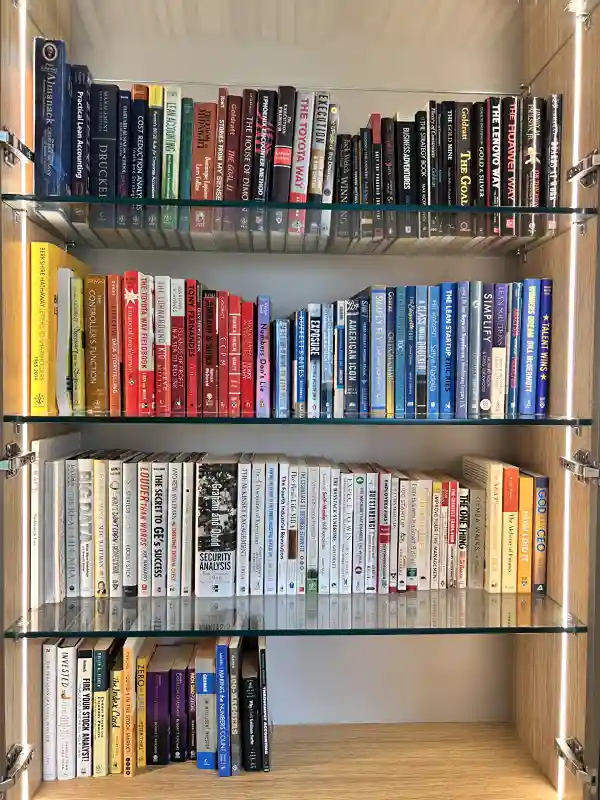
Two cupboards can have exactly the same things inside and still look completely different. Open the calm one, and you’ll notice there’s some order to it: books by genre, clothes by type and then by colour, sarees going from light to dark. The messy-looking one? Everything’s just in whatever order it was last pushed back in.
Choose one simple rule for each space and stay with it. Colour works really well for clothes and sarees, and it’s surprisingly nice for books too. For a family bookshelf, genre or author tends to be easier for everyone. Which rule you go with doesn’t matter half as much as having one.
8. No home for the things that come in every day
Keys. Wallets. Sunglasses. That courier packet. The electricity bill. A circular from school that needs signing by tomorrow. All of this walks into your house every day, and if none of it has a fixed place, it gets dropped on the nearest surface. Honestly, this is where most day-to-day clutter starts.
Set up a little landing spot near the front door. A bowl or a hook for keys, a tray for papers you haven’t dealt with yet, and a spot to open deliveries, with the recycling bag kept right there. The papers can wait in the tray until you’re ready for them. Then, once a month, sit down and file them.
9. Hiding clutter instead of clearing it
The loft. Under the bed. That one cupboard every house has, where everything gets shoved when guests are coming over. Hiding things makes a room look tidy for a day or two. But those spaces fill up very quickly, and once they’re overflowing, everything starts creeping back out into the room.
Treat hidden storage the same way you’d treat any other space. Empty it, sort through it, keep what you’ll really need, and put whatever stays into labelled boxes. And if you open a box and can’t remember what’s inside… that’s probably your answer.
10. Building a system only you understand
You know the spare bulbs are in the third drawer from the left. Nobody else in the house has a clue. So they put things back wherever is easiest, and a few weeks later the system you worked so hard on has quietly fallen apart.
Get everyone who uses the space involved, kids and household help included. Keep things close to where they’re used, label the shelves, and put children’s things low enough for them to reach. On our bigger projects, we also spend time teaching the household staff how we fold, store, and put things away. Going back months later and finding the spaces still looking the way we left them is honestly one of the best parts of this job.
A quick way to check your own home
Not sure where to begin? Stand at the door of any room and ask yourself three things:
- How many things are sitting out on surfaces that don’t need to be there?
- Can I see everything in this cupboard without moving something else first?
- If someone else in the family put this away, would they know where it goes?
If even one answer makes you wince, start right there. One shelf, one drawer, or one tabletop. A couple of small spaces that are fully done will keep you going, whereas a whole house that’s half-done mostly just stresses you out. If you’d like a room-by-room plan, our guide onhow to organize every room in your home will help, and ourdecluttering rules are handy for deciding what stays.
When to bring in a professional organiser

If you’ve already fixed these once and the clutter still keeps coming back, it’s rarely because you didn’t try hard enough. Usually, it’s the system that isn’t working. That’s where aprofessional organizer comes in. We spend time understanding how your family actually lives day to day, plan each space around that, do the hands-on work with you, and leave you with a system that everyone at home can keep up.
We work across Chennai, Bangalore and Hyderabad, and your first consultation with us is free.Get in touch, or have a look at ourhome reorganising service.
Frequently asked questions
Why does my house look cluttered even when it’s clean?
Most often it’s because there’s no visual order. There are too many things out on open surfaces, shelves are packed to the edge, containers don’t match, and things are kept wherever they land. Clear the surfaces, leave a little empty space on each shelf, and you’ll notice a big difference.
Should I buy storage containers before or after decluttering?
After, always. Declutter, measure your shelves, and then buy only what each space needs. When people buy first, they nearly always end up with the wrong sizes and a stack of extra containers.
What is the most common home organisation mistake?
In the homes we work in, it’s buying organisers before decluttering. It does make things look tidier for a while, but you still own just as much, and the extra containers end up adding to the clutter.
How do I start decluttering my house?
Start small, with one shelf, one drawer, or one tabletop, instead of trying to do the whole house at once. Take everything out, keep only what you use, and give each thing a fixed place before moving on to the next space. Once a couple of small spaces are done, the rest of the house feels a lot easier to take on.
How do I get my family to keep the house organised?
Involve them right from the start. Keep things where they’re actually used, label shelves and boxes, and keep children’s things within their reach. A system only works if everyone can follow it without having to ask you.