the story
The project in four chapters
A saree collection 25 years in the making
This wasn't a boutique or a store. It was one woman's personal collection, built over more than 25 years. She had kept every saree passed down to her, alongside the ones she'd bought: sarees from across India, heavy silks and light everyday weaves, wedding sarees and simple cottons, all looked after with real care.
She had built a beautiful room to house them, but the collection had grown beyond what she and her household could manage. More than that, she couldn't actually see what she owned.
She wanted a system that made the whole collection easy to reach, and a space that felt as good to walk into as it looked.
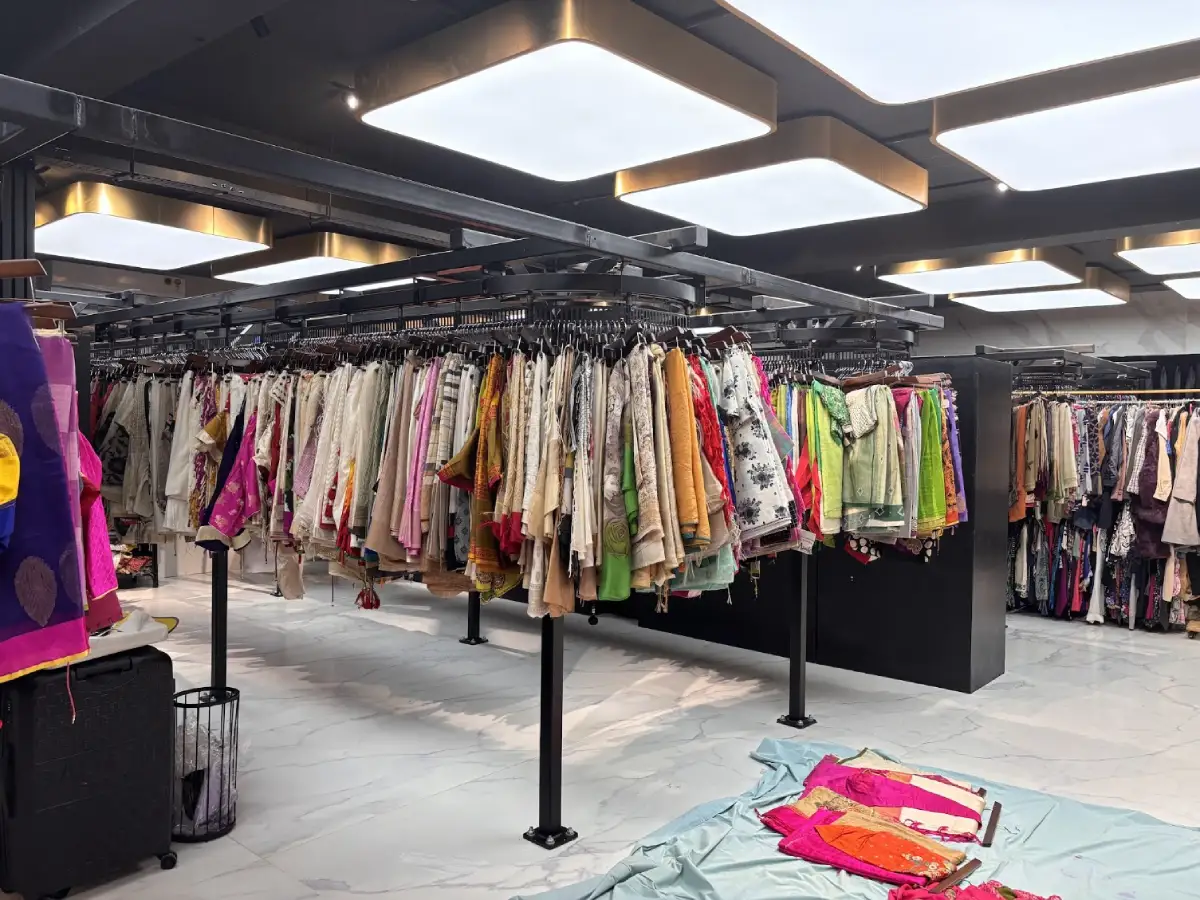
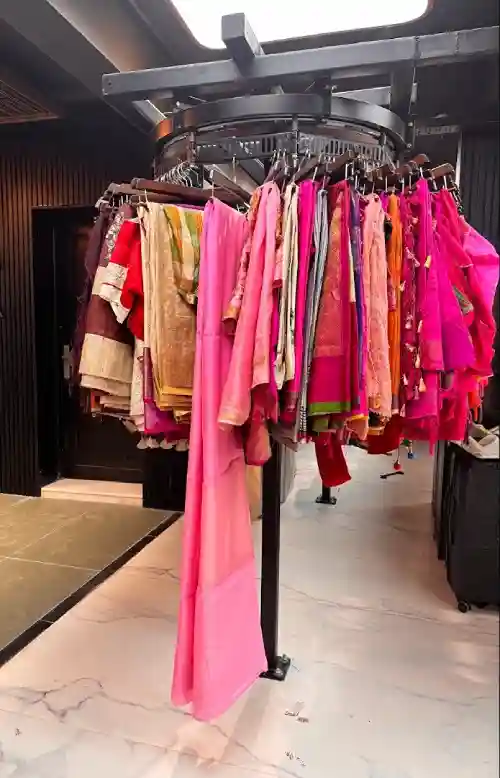
An entire floor for her sarees, with ceiling-mounted rails, before we started.
What we walked into
Every saree was hanging on the rails folded in three, and the rails were packed tight. Technically, you could see them. In practice, it was a wall of fabric.
Colours were mixed with no order, the three-fold drape took up a lot of width on every rail, and there was no way to browse without pulling sarees apart one by one.
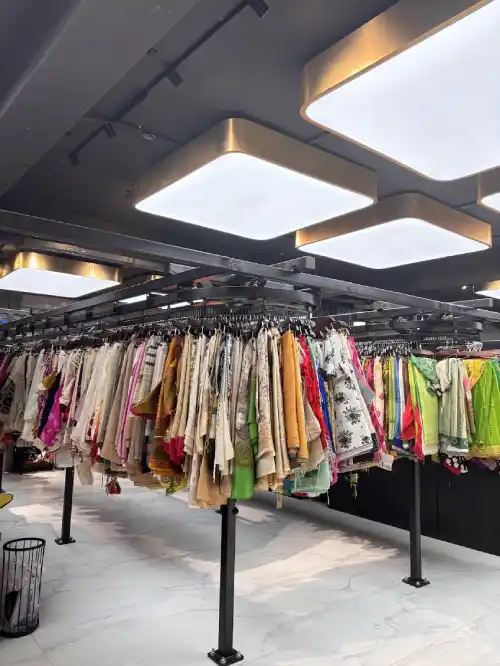
The three-fold drape, up close.
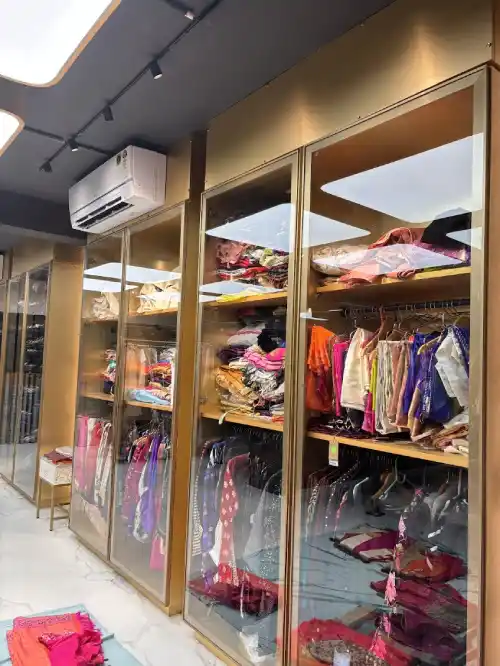
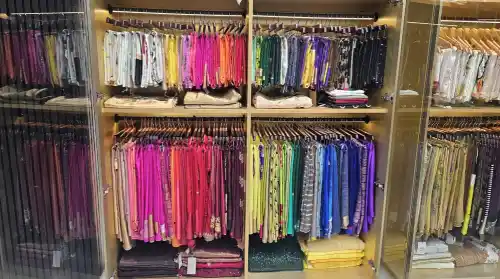
The glass cupboards, which we organised too.
How five people worked through 3,000 sarees
Each colour came off the rails and was spread out on the floor, so the team could see every saree and separate it into shades. A pile of blues became separate piles of navy, royal blue, turquoise and powder blue.
- 1Take sarees down and sort them by colour
- 2Split each colour into its shades
- 3Refold every saree in the two-fold method
- 4Hang them back on the rails in gradient order
Everyone owned one stage and worked at the same time, so the collection kept moving section by section. Giving each person one clear job is what made it manageable.
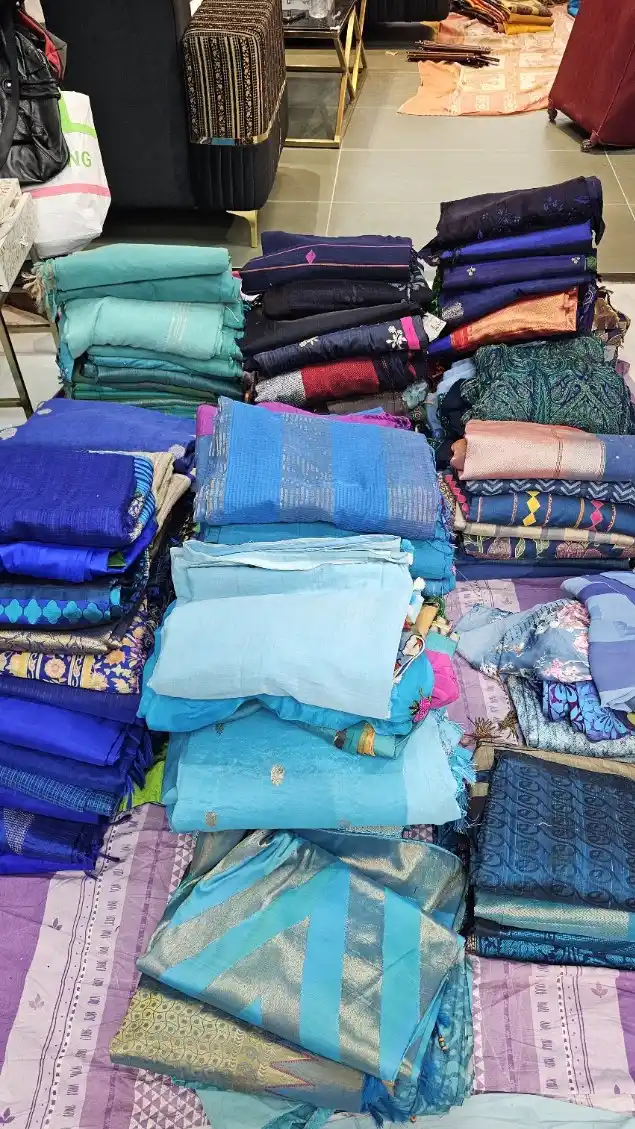
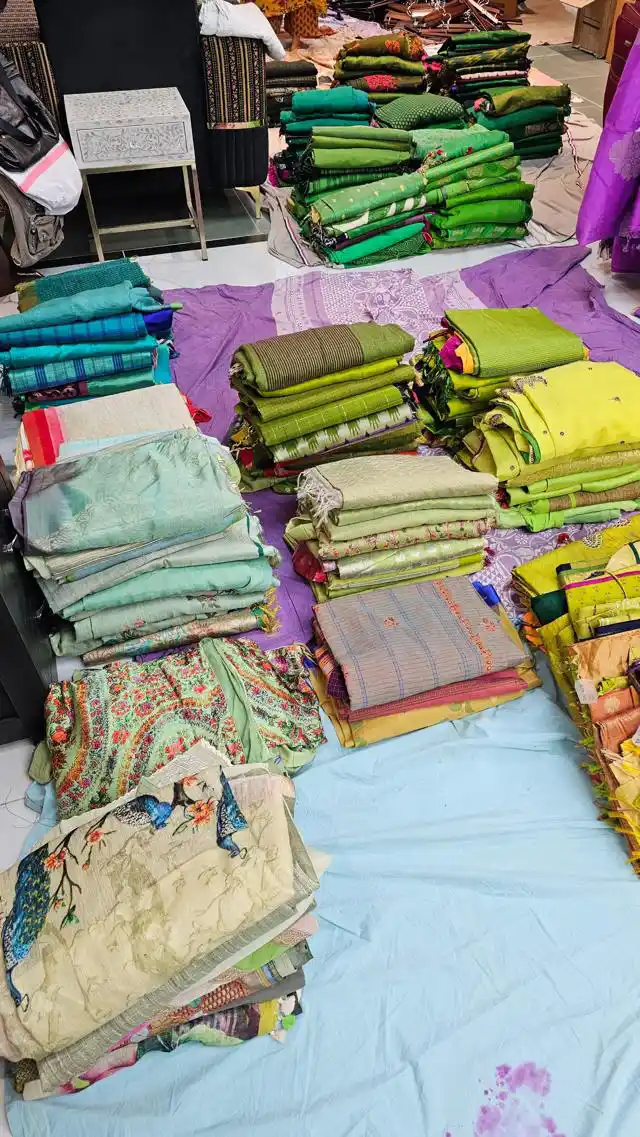
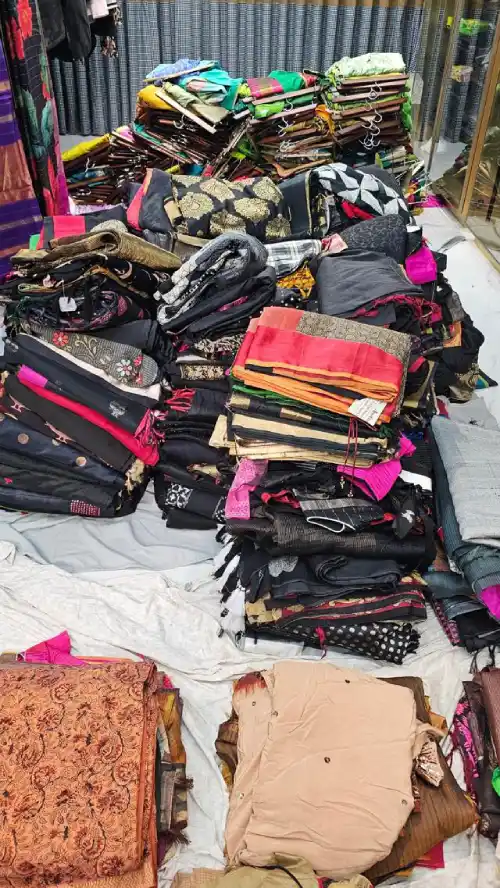
Mid-project: blues, greens and blacks off the rails and spread on the floor, each colour separated into shades before folding.
The finished floor
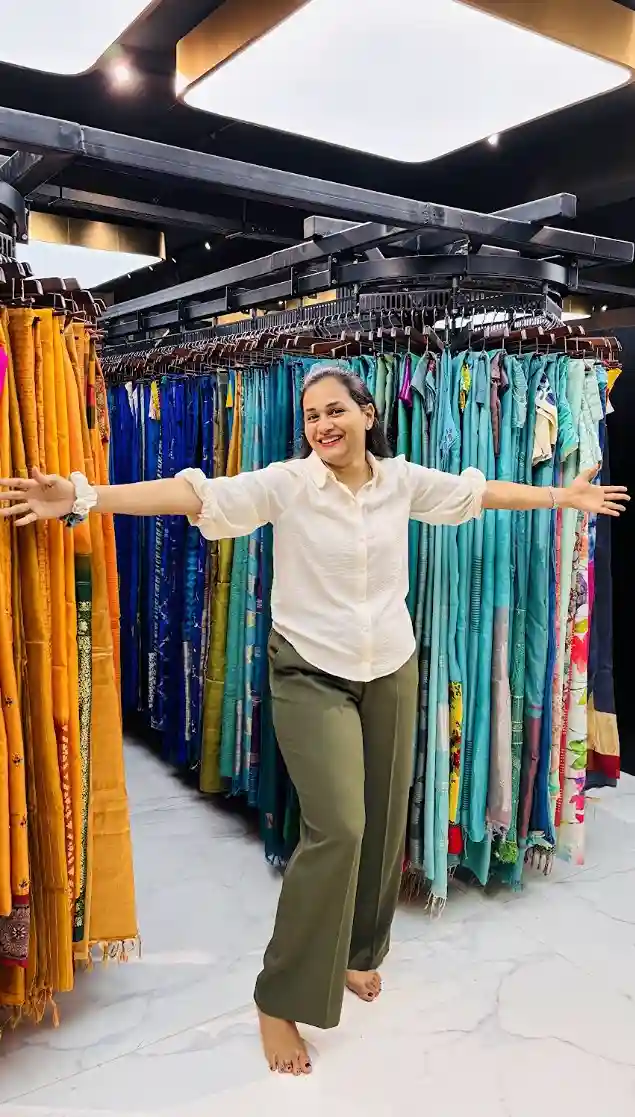
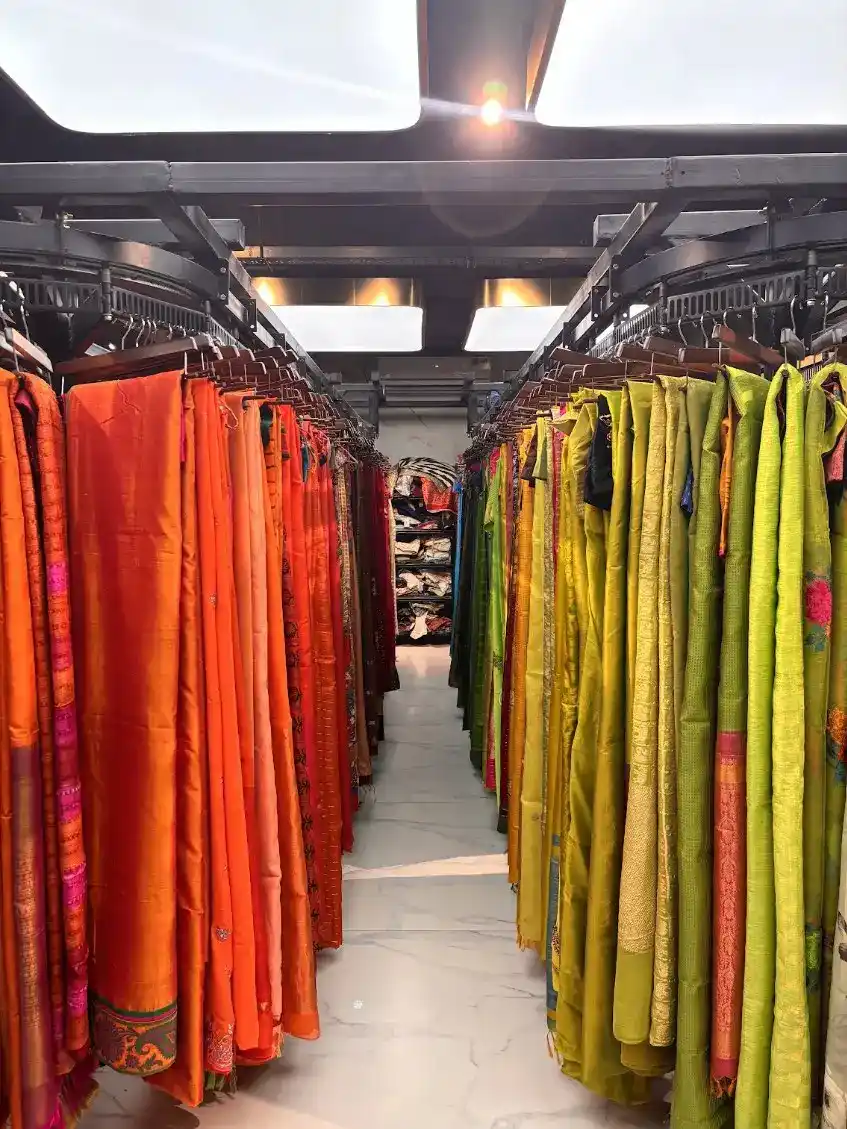
By the end of the week, all 3,000+ sarees were hanging in colour gradients: rows of blacks with flashes of pink, purples running into violets, mustards melting into lime greens, then teals and blues.
- See everything. She can see everything she owns and compare shades side by side.
- Bring any colour to her. The hangers move along the track, so any colour comes right in front of her.
- More room on the rails. The two-fold method freed up rail space.
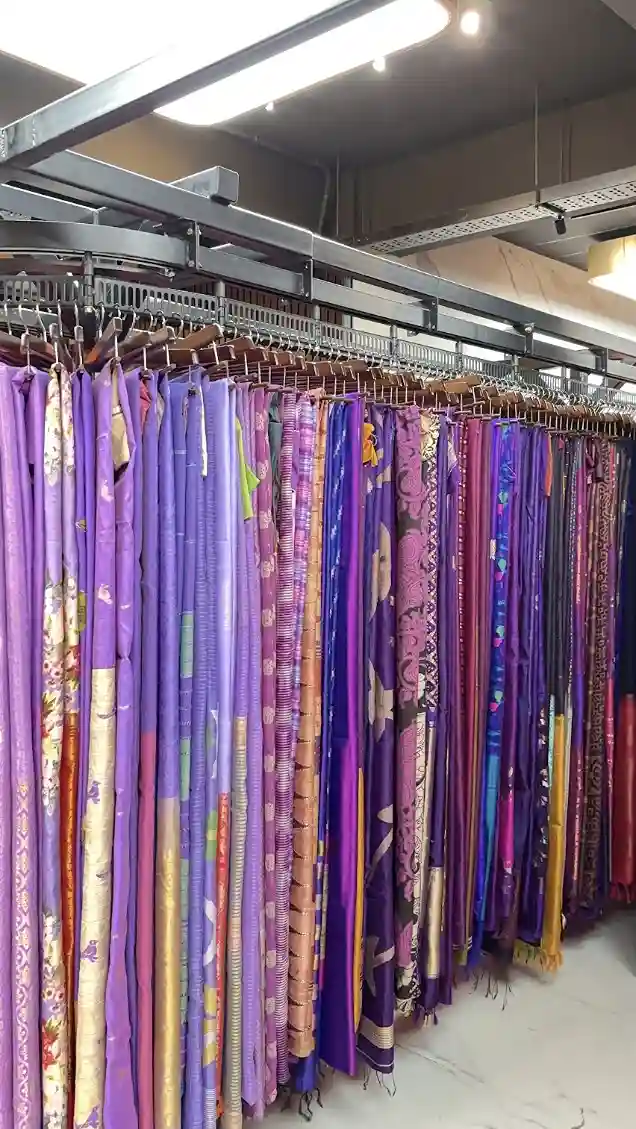
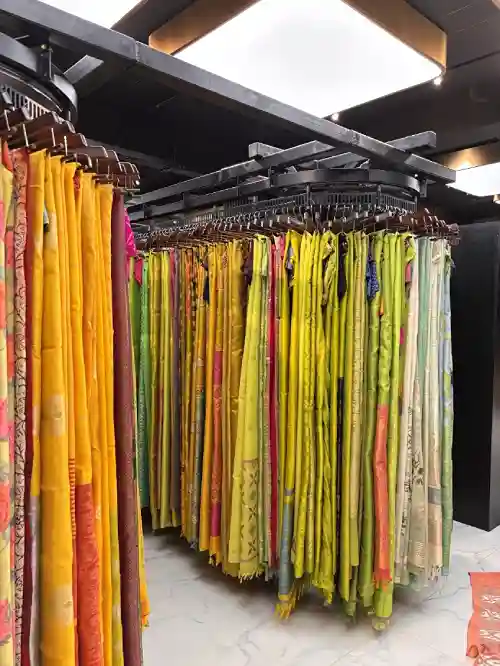
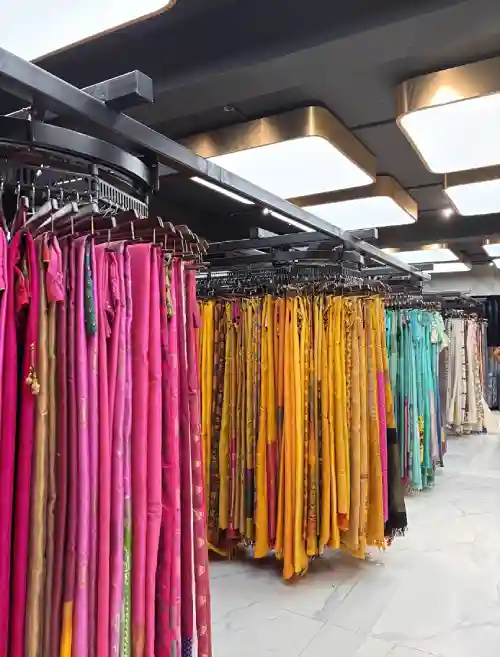
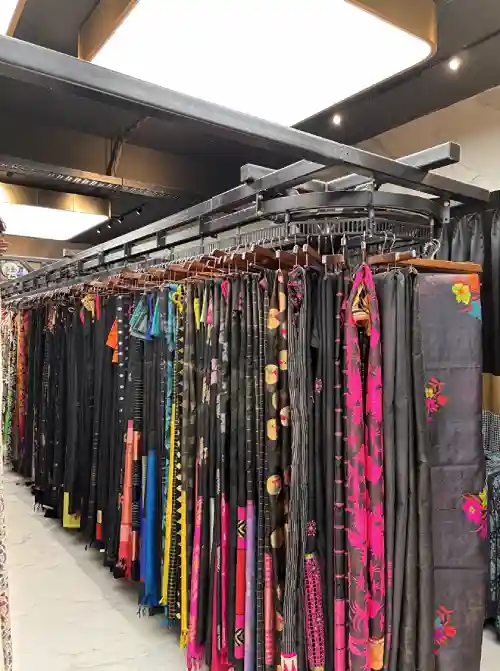
Purples into violets, yellows into greens, pinks, mustards and teals, and the black sarees grouped together.