
By Aanchal Kejriwal, Founder, Arrange It All · IAPO-certified professional organiser
Every year, a few weeks before Diwali, the messages we get at Arrange It All start to sound the same. “I have so many sarees, and I still can’t find the one I want to wear.”
When we open those wardrobes, the problem is almost never space. It’s that the Kanjivaram from your wedding, the cotton you wear every tuesday and the georgette you’ve been meaning to pass on to your cousin are all living in the same stack. Pull one out and three others come tumbling with it.
So before you shop for this year’s festive look, give your saree shelf an afternoon. Here’s exactly how my team and I do it in clients’ homes, and how you can do it in yours.

Before: sarees folded in mixed stacks behind glass. After: every saree on its own hanger, grouped by colour along open rails. An Arrange It All project.
The short answer
Take every saree out. Sort them into four piles: everyday, festive, needs attention, and ready to let go. Then give each saree its own place, either on its own saree hanger or in its own organiser bag, never in a tall mixed stack. Group them by colour so you can see the whole collection at a glance. Store heavy festive silks in breathable cotton or muslin covers, never plastic, and away from damp walls. Keep the sarees you’ll actually wear this Diwali at eye level, with their blouses right beside them.
Why do it before Diwali, not after?
Because this is the one time of year your festive sarees come out of hiding. Most of them have been folded away since the last wedding season or festival, and a lot can happen in a few humid months.
- You’ll see what you already own. We can’t count how many times a client has found a beautiful, barely worn saree at the back of the shelf, a week after buying something similar.
- You’ll catch problems early. A missing fall, a loose pico, a small stain or zari that’s starting to darken is easy to fix in October. On Lakshmi Puja evening, it isn’t.
- The weather is working against your silks. In Chennai, Diwali arrives right in the middle of the northeast monsoon. Dampness is the biggest enemy of a silk saree, so this is the right moment to check every fold.
- Your festive pieces get the protection they need. Heavy zari and embellished sarees shouldn’t be rubbing against everyday cottons all year.
Step 1: Take everything out (yes, everything)
Spread a clean bedsheet on the bed or the floor and empty the shelf completely. Not half of it. All of it. You can’t organise around a pile you haven’t looked at.
Do this in daylight, so you can see true colours and spot any marks. And give yourself a proper afternoon. A saree collection is not a thirty-minute job, and rushing is how sarees end up back in the same mess.
Step 2: Sort into four piles
Pick up one saree at a time and decide which pile it belongs in.
1. Everyday
Cottons, linens, mul and light synthetics: the sarees you reach for for work, temple visits or a regular weekday. These need to be the easiest to get to.
2. Festive and occasion wear
Kanjivarams, Banarasis, Paithanis, tissue silks, anything with heavy zari, sequins or embroidery. These are worn a few times a year and need the most careful storage.
3. Needs Attention
Anything with a stain, a missing fall or pico, a loose border, a snag or tarnished zari. Keep these aside and get them sorted before Diwali. For silks and heavy zari work, use a dry cleaner who knows silk. It’s worth it.
4. Ready to let go
Here’s the question I ask clients: “If you saw this saree in a shop today, would you buy it?” If the answer is no, and you haven’t worn it in years, it’s probably time. Give it to someone who’ll love it, donate it, or have it turned into dupattas, cushion covers or a quilt.
We never ask anyone to part with a saree that carries a story. Your mother’s wedding silk or your grandmother’s cotton doesn’t need to be in daily rotation, but it deserves a safe home. We’ll come to that in Step 5.
Step 3: Decide how you’ll find a saree in a hurry
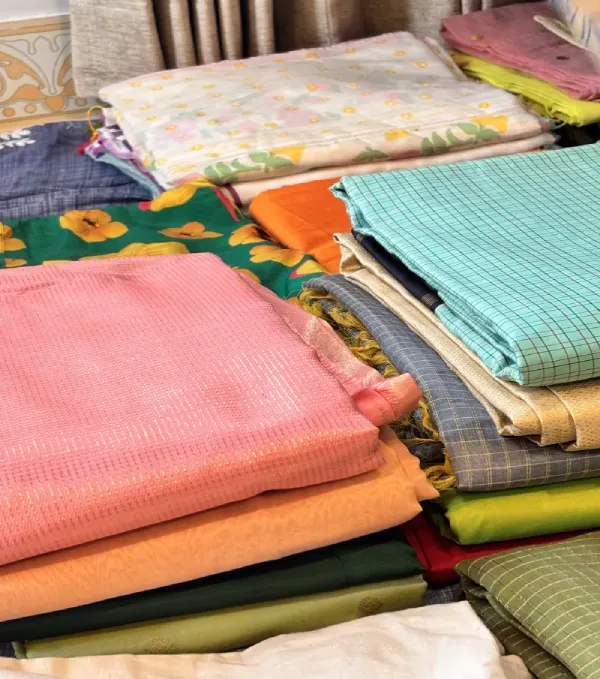
Sarees organised by occasion and colour, making it easier to find the right saree in a hurry
Once the piles are done, choose one system and stick to it. In most homes, we organise by occasion first, then by colour.
- Occasion. Everyday, office, festive and wedding each get their own section.
- Colour within each section. When you’re getting ready, you think “I want something in green”, not “I want my 2019 silk”. So we keep each colour family together: all the mustards and yellows in one run, then the pinks and magentas, then the blues and teals, then the greens. You can see this in the “after” photo above. The whole collection reads like a colour chart, and you can choose a saree from across the room.
- Light to dark within each colour. Inside each block, go from the lightest shade to the deepest. It looks calm, and it tells you straight away if you have five near-identical mustards and no pale lemon.
- Blouses travel with their sarees. Fold the blouse inside the saree, or keep it in a small pouch right next to it. Nothing is worse than finding the perfect saree at 7 pm and no blouse.
If fabric matters more to you than colour, group by fabric instead: cottons in one place, silks in another, delicate georgettes and chiffons on their own. Any system works, as long as everyone in the house knows it.
Step 4: Choose the right saree organiser
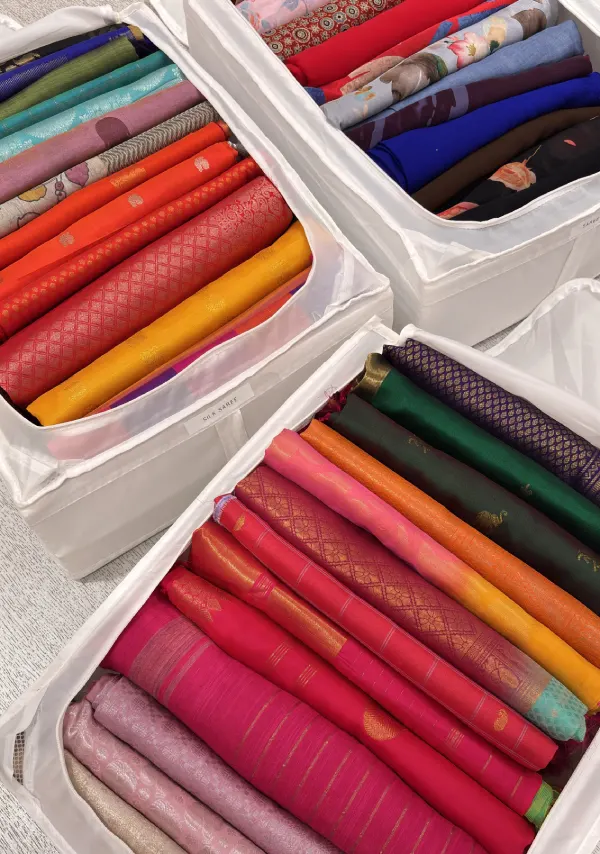
Sarees neatly arranged in a dedicated organiser, grouped by colour for easy access without disturbing the rest.
A good saree organiser does two things. It keeps each saree separate, so pulling one out doesn’t disturb the rest, and it lets you see what’s inside without opening everything. Here are the saree storage ideas I use most in clients’ homes.
One saree, one hanger: for large collections
When a client has a big collection and the room for it, our favourite set-up is the one in the photo: every saree on its own hanger, hung along long rails, grouped by colour. Compare that with the “before”: sarees folded into mixed stacks, some hung, some piled, and no way to see what’s at the back without pulling everything out.
- Use proper saree hangers. Choose wide wooden or padded hangers with a bar, not thin wire. Fold the saree in half lengthwise and drape it over the bar, so the border and a bit of the pallu stay visible.
- One saree per hanger. Two sarees on one hanger defeats the purpose: you’re back to digging.
- Leave breathing room. Don’t pack the rail tight. Air needs to move between sarees, and you should be able to slide one out with one hand.
- Know what to hang. Cottons, linens, georgettes, chiffons and light silks hang beautifully. Very heavy zari silks and fragile heirlooms are safely stored in storage bags.
No room for rails? You can get the same effect on a smaller scale: a dedicated hanging section in your wardrobe for this season’s sarees, colour-blocked the same way, with the rest folded in organiser bags below.
Saree organiser bags
Saree organizer bags are my first choice for festive sarees. Look for a breathable fabric bag with a clear window, a zip, and a firm base that holds its shape. Store them standing up, side by side like files, instead of stacked. You’ll see every saree at a glance, and the one at the bottom never gets crushed.
Shelf dividers
For open shelves of everyday sarees, simple dividers stop stacks from leaning and sliding into each other. Keep each stack to five or six sarees. If you have to lift five to reach the sixth, the stack is too tall.
Storage boxes
Boxes work well for cottons and synthetics, especially on a loft or top shelf. Just make sure they’re clean and dry, and never seal a silk saree inside an airtight container. Silk needs to breathe.
What I avoid
The plastic covers that sarees come in from the shop or the dry cleaner; they are fine for a day, but over months they trap moisture, and that’s how you end up with musty smells, mildew spots and weakened fabric.
We’ve shared a few of our favourite saree storage finds on Instagram, if you’d like to see them in use.
Step 5: Store your festive silks the way they deserve
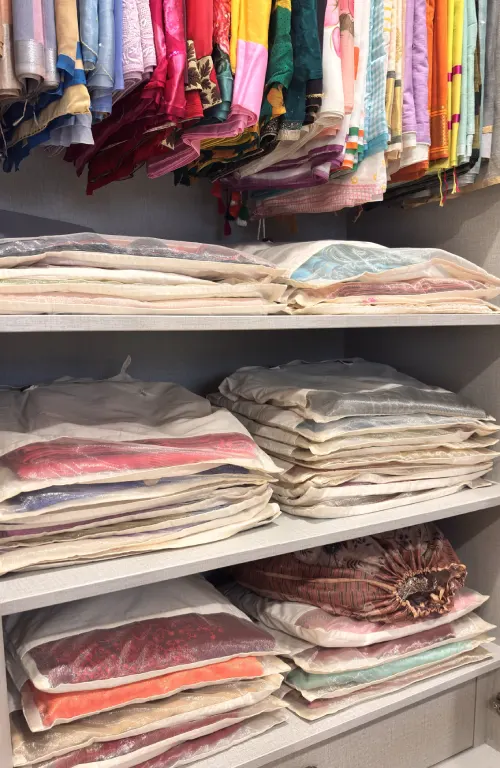
Your Kanjivaram might sit untouched from one Diwali to the next wedding. These few habits will keep it ready.
- Never put a saree away straight after wearing it. Air it on a hanger for a few hours so sweat and perfume can dry out. If there’s a stain, deal with it now, not next year.
- Wrap it in soft cotton. An old mul cotton saree, a veshti or a piece of muslin makes the perfect cover. It keeps dust off and stops zari from catching on the next saree.
- Refold every few months. Zari tends to crack along the same fold line. Open your silks every three months or so and fold them along different lines.
- Hang lighter sarees, fold the heaviest. Most sarees are happy on a wide saree hanger. A very heavy zari silk, though, can strain at the fold if it hangs for months on end. Fold those, wrap them in cotton, and keep them on a shelf where nothing heavy sits on top.
- Keep naphthalene balls off the fabric. If you use them, keep them in a small cloth pouch in the corner of the shelf, never touching the saree. Many families prefer dried neem leaves in a muslin pouch.
- Watch the walls. Keep your saree almirah away from damp walls and direct sunlight. On humid days, open the doors for an hour to let air in, and tuck a few silica gel sachets onto the shelf.
Heirloom sarees, the ones that are old, fragile or very valuable, deserve the top shelf, a cotton wrap each, and a refold every couple of months. Treat them like the treasures they are.
Step 6: Set up the wardrobe so it stays tidy
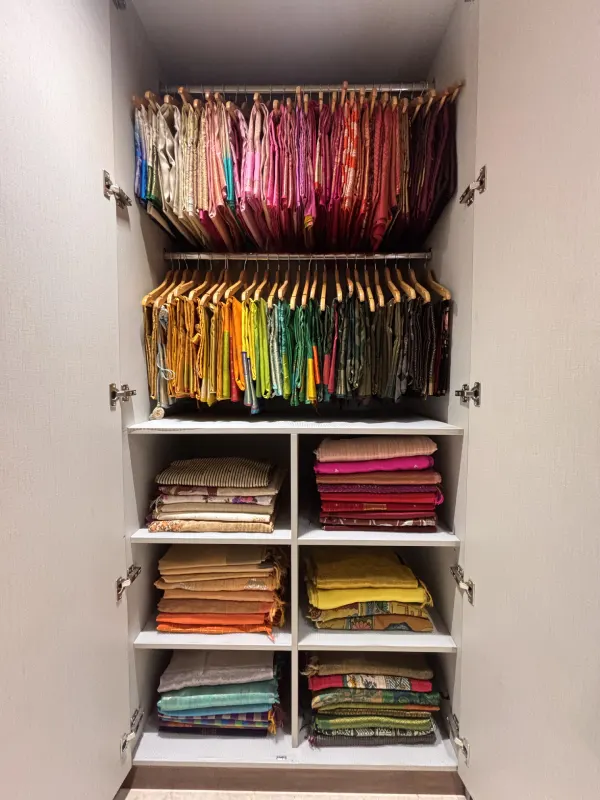
Sarees are neatly hung by colour, making the wardrobe look tidy and easy to use.
Where each saree goes matters as much as how it’s folded. A simple layout I recommend:
- Eye level: the sarees you’ll wear this season, including your Diwali picks. If you have a hanging section, this is where it goes, colour-graded .
- Easy reach: everyday cottons and office sarees.
- Top shelf or loft: heirlooms and rarely worn sarees, well wrapped and labelled.
- A small drawer or pouch: falls, safety pins, saree pins and matching accessories, so they stop wandering.
Label each section, even with a simple tag. It helps more than you’d think, especially when someone else at home is putting sarees back. I’ve written a separate, more detailed guide on how to organise sarees in your wardrobe if you’d like to go deeper.
Step 7: Keep it that way after Diwali
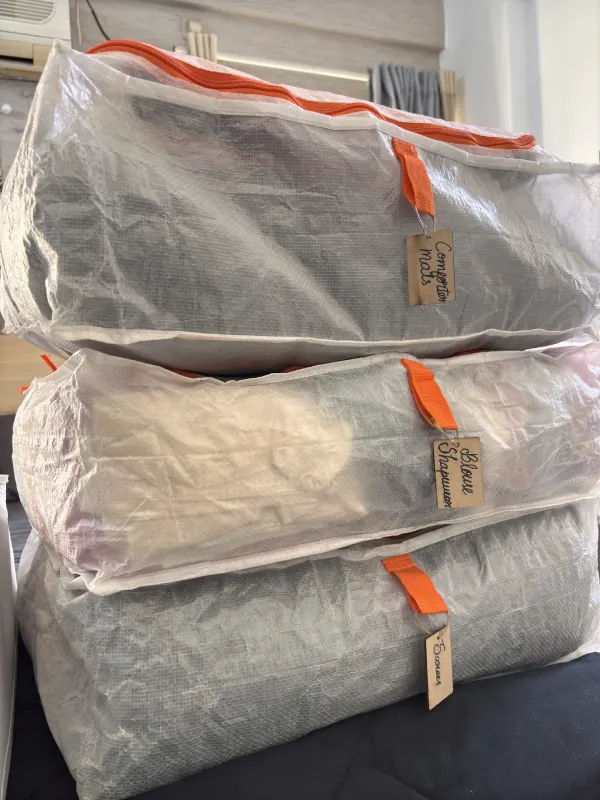
Sarees stored in protective covers to keep them clean and safe after Diwali.
Decluttering once is the easy part. These small habits are what keep the shelf looking good in January.
- After you wear a saree, air it for a day, then put it back in its place, not on the chair.
- Follow one in, one out. When a new saree comes home, decide which one leaves.
- During the monsoon months, check your festive shelf once a month for any damp smell or spots.
- Keep a photo of each festive saree on your phone, with a note of where it is and whether the blouse is ready. Planning an outfit becomes a two-minute job.
If you’re doing a bigger clean-up across the house, our Diwali declutter checklist covers every room.
When to call in a professional organiser
Some saree collections are simply too big, or too emotional, to tackle alone. If you have a hundred-plus sarees, you’re moving house, or you’ve tried this twice and it’s slipped back, a professional organizer can help. My team sorts the collection with you, sets up storage that fits your wardrobe, and shows everyone at home how to keep it going.
We work across Chennai, Bangalore and Hyderabad, and the first consultation is free. If your saree shelf is giving you stress this Diwali, send us a message and let’s make it a happy space again.
Frequently asked questions
What is the best way to declutter sarees before Diwali?
Take every saree out and sort them into four piles: everyday, festive, needs attention and ready to let go. Fix or clean the ones that need care, pass on the ones you no longer wear, and put the rest back by occasion and colour.
Which saree organiser is best for a wardrobe?
If you have hanging space, wide saree hangers (one saree each, grouped by colour) are the easiest to see and use. For shelves, breathable fabric saree organiser bags with a clear window, stored upright, work best. For everyday sarees on open shelves, dividers with stacks of five or six are enough. Avoid plastic covers for long-term storage.
How should silk sarees be stored for a long time?
Make sure the saree is clean and completely dry, wrap it in soft cotton or muslin, and keep it folded on a dry, dark shelf away from damp walls. Refold it along new lines every three months or so, and keep naphthalene or other pest repellents from touching the fabric.
How do I arrange sarees in a small wardrobe?
Store sarees upright in organiser bags rather than in tall stacks, so you can see each one. Keep this season’s sarees at eye level, move rarely worn ones to the top shelf or loft, and keep blouses with their sarees to save space and time.
How can I make a saree cover at home?
Take an old soft cotton saree, a veshti or about a metre of muslin. Cut a rectangle roughly twice the size of your folded saree, plus a little extra for seams. Fold it in half, stitch the two open sides, and add a zip, buttons or cloth ties at the top. Wash and dry the cover fully before you use it.